Looking for a fast, simple, and beautiful way to make bunting?
This quick and easy bunting tutorial is perfect for beginners; ideal for decorating summer parties, birthdays, nurseries, and celebrations. I am using a stunning Liberty Tana Lawn Cotton, but you can use any lightweight cotton or craft fabric you love.
Prefer to watch? See my video: How To: Quick Liberty Bunting Tutorial on YouTube.
With single-layer pennants, you can make this bunting in 30 minutes.


Fabric – cotton or lightweight upholstery fabric, (I used Liberty Tana Lawn Cotton).
For 9 pennants on 2.5m bias binding, you’ll need approximately ½ metre of fabric. If mixing colours or prints, divide the total accordingly.
Bias Binding – 2.5 metres x 1″ (2.5cm)
Increase the length if you want more pennants, or place them closer together. (I spaced mine 2cm / ¾” apart).
Thread
Bunting Template (7½” / 19cm wide × 8½” / 21cm long) – Download Here
Print and cut in card for stability.
Scissors
Pinking Shears
Chalk, pencil, or removable fabric pen
Pins
Ruler or tape measure
TIP: No pinking shears? Use a fabric that doesn’t fray heavily and cut along the template line.

Place the fabric RIGHT side facing down.
Lay the template on top of the fabric and trace around it using chalk or a removable pen.
Repeat for as many triangles (pennants) as you need.


Firstly cut roughly around each drawn shape using normal scissors; approximately ½” (1cm) outside the drawn line. You can cut directly along the top edge line because this edge won’t be pinked.
Next, use your pinking shears to cut the two slanted sides. Start at the top, cut down to the point, turn, and cut back up the other side.
Align each new cut with the previous zigzag on the pinking shears, so the pinking pattern stays continuous.
Repeat for all pennants.


Lay out the pennants and decide on your order, this is the fun part!
Mix colours, prints, and balance your layout before you start sewing.


Fold your bias binding in half lengthwise to find the centre. Mark with a pin or removable pen.
Do the same with the bunting:
If you have an odd number of pennants, the centre of the bunting is the middle pennant.
If you have an even number of pennants, the centre of the bunting sits between two pennants.
I am working with an odd number (9) of pennants and therefore my centre is the centre of the middle pennant, mark this with a pin or removable pen.
Match the centre of the binding to the central pennant or position.


Place the RIGHT side of the pennant facing UP.
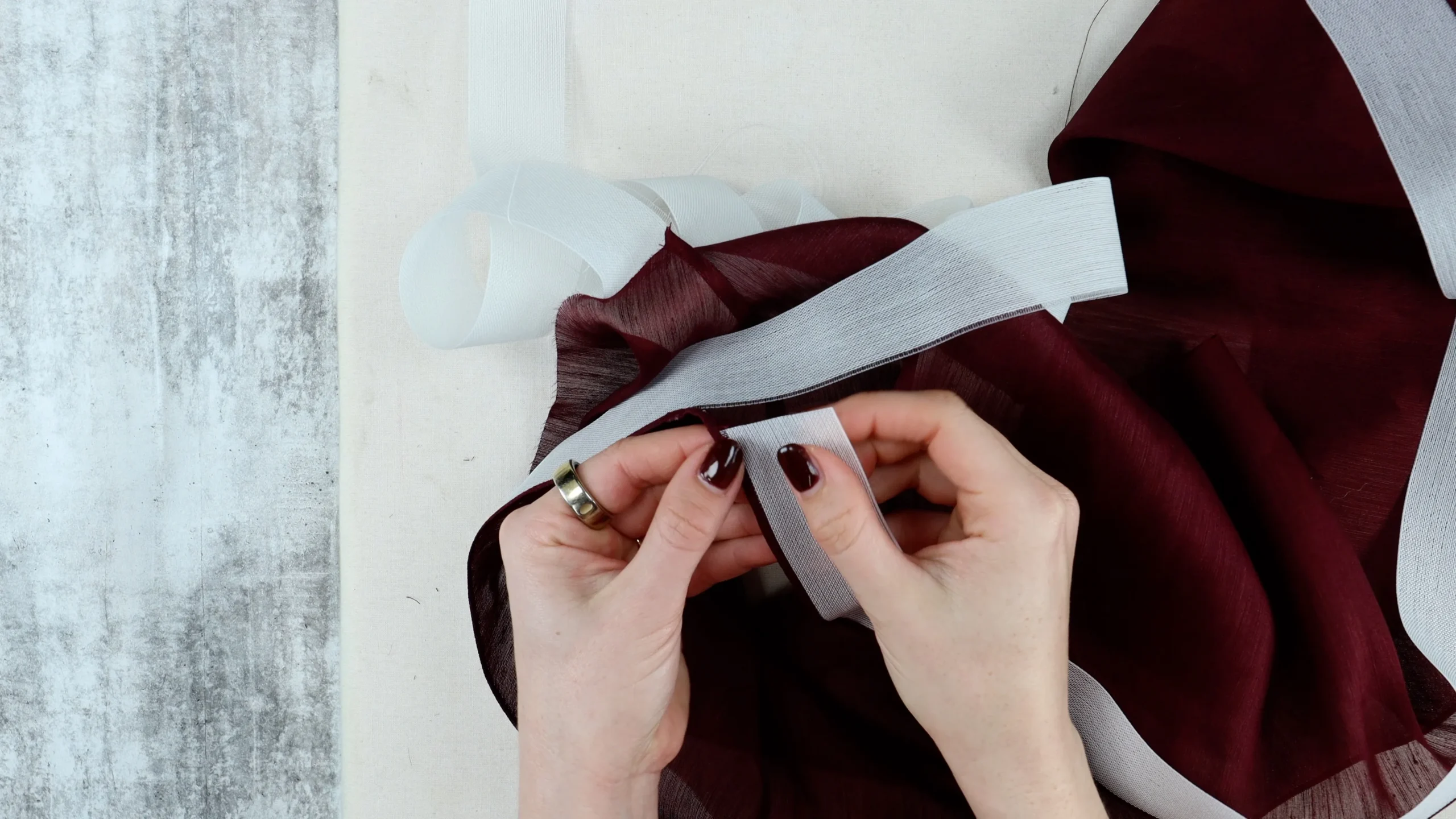
Open the binding and sandwich the top edge of the pennant inside the binding, so that the binding folds evenly over the front and back top edge of the pennant.
Pin approximately 1/8″ (3mm) from the edge of the bias binding. Make sure the pin goes through both sides of the binding, the same distance from the edge of the binding; this ensures a professional finish when stitching.

I used a 2cm (¾”) gap between pennants, measured from the top corner of one pennant to the next. Stay consistent for even spacing.
Work from the centre outwards until all pennants are pinned.

After the last pennant, fold the bias binding in half and continue pinning along the edge of the bias binding.
When you get to the end of the bias binding:
Fold in the short raw edge by 1cm (½”)
Fold the binding in half; as completed along the length of the bunting


Sew 1/8″ (3mm) from the edge of the binding to attach the pennants. Use a mark on your presser foot (or adjust your needle position) to keep a consistent seam line. A tidy edge makes a big difference.
Start sewing at the end of the binding where you folded in the raw edge to create a neat finish; starting can be fiddly, using a walking foot can help to feed the layers more evenly.
Sew along the entire length, securing all pennants in place. Trim threads.

Your quick Liberty bunting is complete. Perfect for parties, picnics, weddings, or decorating your home or studio. Try mixing Liberty prints, seasonal colours, or contrasting fabrics for a different look each time.