Inseam pockets (also called side seam pockets) are one of the most practical details you can add to a handmade dress or skirt.
When drafted and sewn correctly, they:
Sit flat
Feel comfortable to wear
Don’t show from the outside
Stay in position throughout the day
In this tutorial, I’ll show you:
How to draft an inseam pocket
How to stabilise the pocket opening properly
Method 1: a standard inseam pocket (easy + reliable)

Method 2: a more professional method that helps the pocket sit toward the front of the garment


Tools
Fabric scissors
Pins or clips
Chalk or removable pen
Ruler and tape measure
Sewing machine
Iron
Finishing Options
Overlocker/serger (preferred)
Sewing machine overcast stitch
Pinking shears (quick alternative)
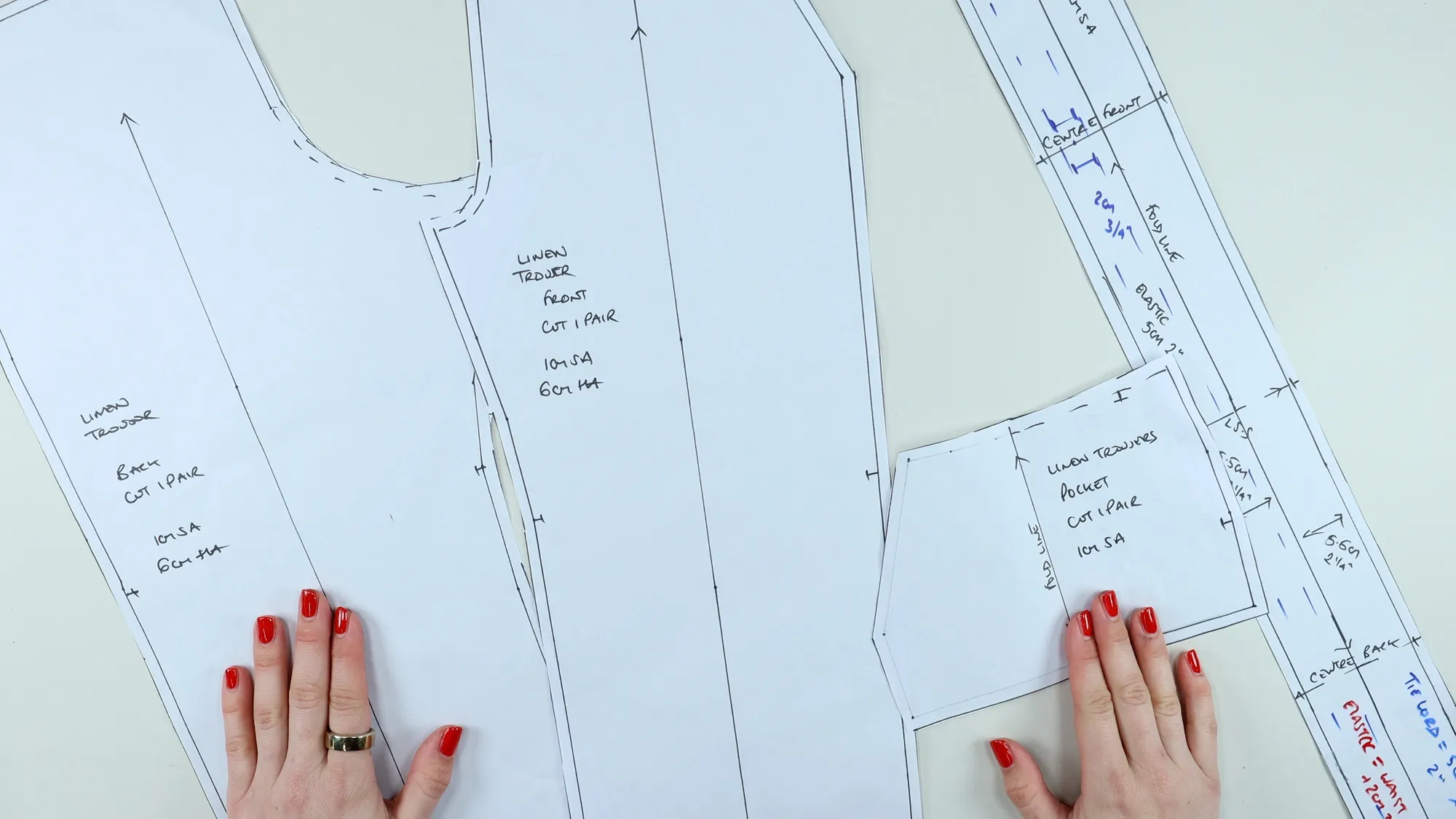
Pattern Pieces
Front garment piece
Back garment piece
Pocket pattern piece (cut 4 total)
Download the pocket pattern piece here: Inseam Pocket Pattern
Step 1: Choose Your Pocket Placement
A good starting point:
Pocket start: 2.5 cm / 1” down from the waist
Pocket opening length: 15-17 cm / 6-6½”
General guide:
Pocket opening: 13-20 cm / 5–8”
Placement from waist: 2.5-10 cm / 1-4”
If your garment is very fitted, inseam pockets may gape or show from the outside. More ease = cleaner results.

Step 2: Mark Your Pocket Notches
On both front and back side seams, mark:
Top pocket notch (start)
Bottom pocket notch (end)
Accuracy matters, these notches control the entire pocket construction.
Step 3: Draw the Pocket Shape
Draft a smooth curved pocket bag:
No sharp corners (corners collect lint and wear faster)
Large enough to fit your hand comfortably
A gentle curve sits better inside the garment


Step 4: Trace the Pocket Pattern Piece
Trace the stitching line first
Add seam allowance after
My preference:
1 cm / ⅜” seam allowance around the pocket
Match your garment’s seam allowance

Step 5: Add the Grainline
Place the grainline parallel to the side seam/pocket opening.
This stabilises the opening and reduces stretching.
Step 6: Cut Your Pockets
Cut 4 pocket pieces total:
Option A: All 4 in main fabric
Option B: 2 in main fabric + 2 in pocketing/lining fabric (reduces bulk)

Optional: Connecting the Pocket to the Waist Seam
If drafting into a skirt, you can extend the pocket shape up into the waist seam.
This helps anchor the pocket and prevents it from shifting.
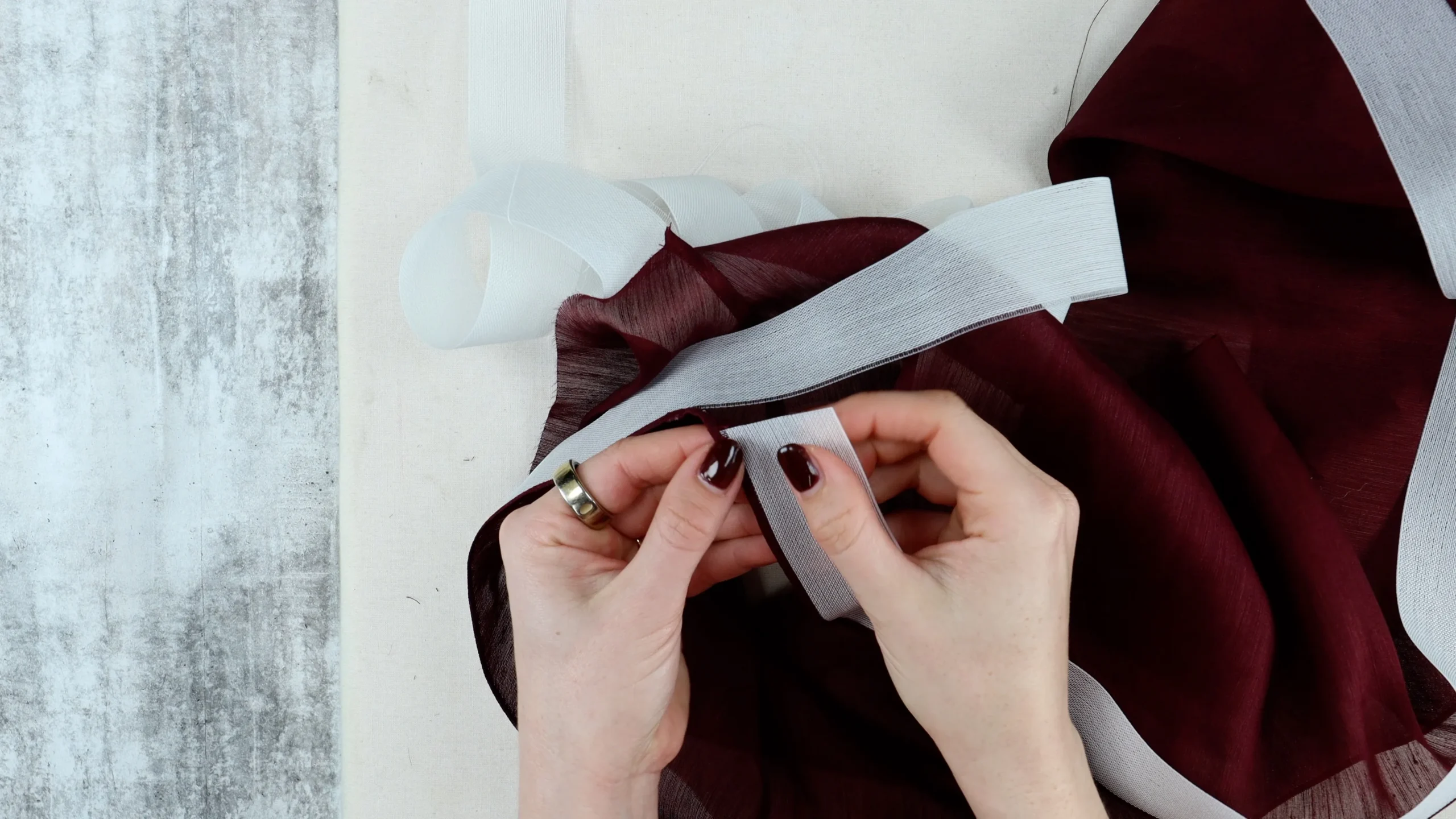
Before sewing either method, stabilise the pocket opening.
Step 1: Cut Interfacing Strips
Use lightweight woven fusible interfacing:
2 cm / ¾” wide
Cut on the straight grain

Step 2: Fuse to the Side Seam
On the wrong side of the garment:
Align with the raw edge of the side seam
Start and stop 1 cm / ⅜” above and below pocket notches

Apply to the front garment piece as a minimum.
Apply to the back as well if your fabric requires it.
This method slightly staggers the pocket so it sits more “inside” the garment and is less visible from the outside.


Step 1: Finish the Curved Edges
Overlock/serge the curved outer edge of all four pockets.
Don’t trim fabric away
Don’t stretch the curve
Press flat

Step 2: Attach Pockets to Front and Back
Front piece (right side up):
Pocket right sides facing front fabic
Align straight edge with side seam
Match notches and pin
Back piece:
Repeat the same process

Ensure pockets are placed symmetrically on the garment and align correctly.
Compare both front pockets, and front to back pockets placement.

Step 3: Stitch with a Slightly Smaller Seam Allowance
If your seam allowance is 1 cm / ⅜”, stitch at approximately 5 mm / ¼”.
This helps the pocket to sit slightly back from the seam and appear more hidden.


Step 4: Finish Side Seams
Overlock/serge the side seam edges of both garment pieces.
Finish the straight pocket edge at the same time.

Step 5: Edge Stitch the Pocket
Push the pocket bag toward the seam allowance.

Edge stitch:
2-3 mm / ⅛” from the seam line
Sew through pocket + seam allowances underneath
Repeat for all four pocket pieces.

Step 6: Sew the Side Seam and Pocket Together
With front and back right sides together:
Match waist, pocket notches, hem


Sew from hem upward (or be consistent on both sides)
Pivot at pocket notch
Sew around pocket curve
Pivot again at next notch
Continue seam


Reduce stitch length to 1.5 mm for 2 cm / ¾” either side of the pocket corners.
Step 7: Reinforce the Opening
You can reinforce the pocket opening by:
Shortening stitch length around corners
Sewing over the stitching near notches (2 cm / ¾” either side of the pocket corners)
Adding a bar tack at the top and bottom of the pocket opening

Step 8: Press the Pocket
Press the pocket bag towards the front on the inside of the garment.

Check that the pocket opening is consistent.
There is the same distance between the garment and pocket material across the length of the pocket opening.

This method encourages the pocket to sit toward the front of the garment and reduces the pocket movement inside the garment.


Step 1: Sew Front Pocket Between Notches
With front garment right side up:
Place front pocket bags with right side down

Stitch only between the pocket notches
Use full seam allowance
Backstitch exactly at notches

Step 2: Clip to Notches
Clip from side seam into the end of pocket stitching and pocket notches:
Clip close, but not through stitching
Leave about 3 mm / ⅛”
This releases the seam allowance.

Step 3: Finish Pocket Seam Allowances
Using an overlocker/serger finish the pocket seam allowances.
Tidy the overlocking threads at the start and end of the seam, by threading back through the stitching using a large eyed needle.


Step 4: Press Pocket
Press the pocket towards the side seam.
Step 4: Edge Stitch the Pocket
Edge stitch 2-3 mm / ⅛” from seam line.
Start and stop exactly at pocket notches.

Do not catch the seam allowances above and below the clipped pocket notches.

Step 5: Sew Pocket Bags Together
Place back pocket bag right sides together with front pocket bag.
Sew from notch to notch around the pocket curve.
Overlock/serge the outside pocket edge.


Step 6: Press Pocket Opening
Press the pocket opening in position.
Ensure that the garment front is visible for 2-3 mm / ⅛” from the inside opening of the pocket.


Step 7: Sew the Side Seam
Place front and back right sides together at the side seam.
Pin and check the work before sewing at the machine.


At the machine:
Sew side seam using full seam allowance
At pocket notches, sew close to but do not catch the finished front pocket edge
Catch the clipped seam allowances above and below the pocket notches
Reinforce at pocket opening/pocket notches

Step 8: Finish and Press
Finish the side seam using the overlocker or serger.

Press seam allowances toward the back of the garment using a seam roll.
The pocket will naturally sit toward the front of the garment.
Why do inseam pockets gape?
Inseam pockets gape when the garment is too fitted or the pocket opening hasn’t been stabilised with interfacing.
Can you add inseam pockets to any dress?
Yes, provided the garment has enough ease through the hip area.
What is the best fabric for pocket bags?
Lightweight cotton or pocketing fabric reduces bulk and prevents visible pocket outlines.
I use a downloadable pocket pattern piece in this tutorial.
Download it here: Inseam Pocket Pattern
Lightweight cotton or pocketing fabric reduces bulk and prevents visible pocket outlines.
Looking for a project to put this technique into practice? The Neve Dress Sewing Pattern features in-seam pockets and uses the professional pocket construction demonstrated in this tutorial.