Wondering what sewing tools are actually worth buying? In this post, I’m sharing the 5 sewing tools I reach for every single day in my studio – the result of months of paying close attention to what I actually pick up during a typical day of dressmaking.
Whether you’re a beginner building your first sewing kit, or you’ve been sewing for years and want to know what an experienced dressmaker genuinely recommends – this list is for you.
*affiliate links below
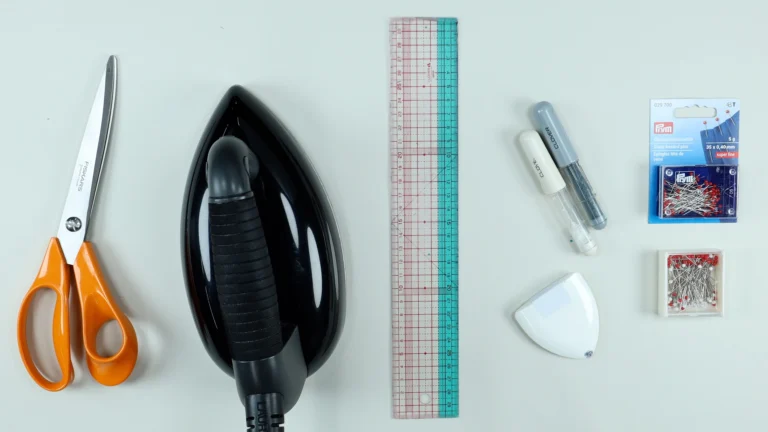
| Tool | Brand | Best For |
|---|---|---|
| Scissors | Fiskars 25cm (8″) | All-round dressmaking |
| Iron | Laurastar | Pressing seams professionally |
| Rulers | Clover / Sew Easy | Pattern work & measuring |
| Chalk Pen | Clover Chaco Liner | Marking fabric cleanly |
| Pins | Clover / Prym Silk Pins | Most dressmaking fabrics |
| Bonus: Snips | Gingher | Thread trimming & clipping curves |
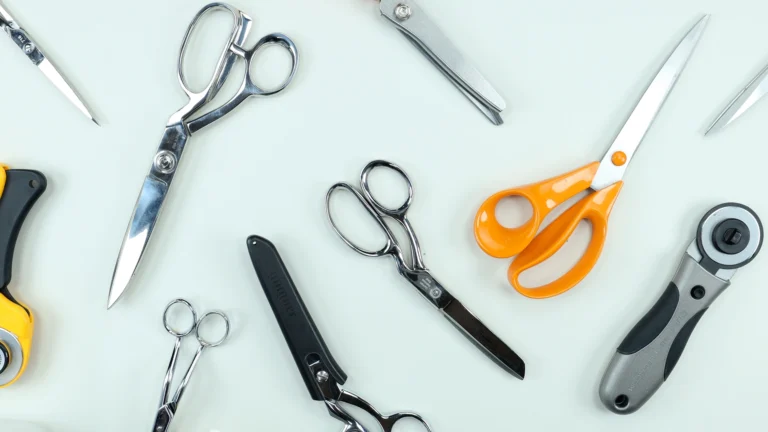
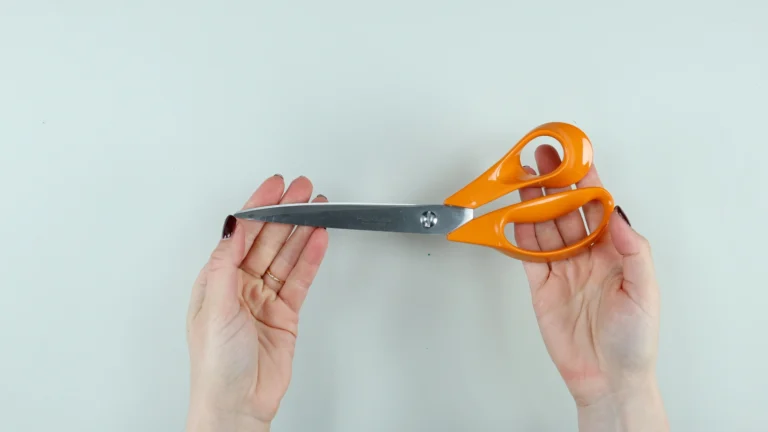
Every dressmaker needs a good pair of scissors, but after analysing what I actually reach for across more than 20 pairs I own, one pair stood out consistently: the Fiskars dressmaking scissors in the 25cm (8″) length.
What makes them my go-to isn’t just sharpness – most quality scissors are sharp. It’s the comfort. They’re lightweight and feel good in the hand, even during extended cutting sessions. Fatigue builds up when you’re cutting out a full garment, and a comfortable pair of scissors makes a real difference.
I’ve had this sewing tool for around 10 years and I’ve never had them sharpened. They’re still cutting beautifully.
A note on rotary cutters: I do use a rotary cutter for specific situations – stretchy fabrics, very lightweight materials, and small detailed work like lingerie patterns. But for most dressmaking, I reach for scissors.
Tips for your scissors:
My verdict: The best value everyday dressmaking scissors I’ve found. Comfortable, sharp, durable, and surprisingly affordable.
Shop the Fiskars Dressmaking Scissors
This might surprise you, but my second most essential sewing tool isn’t a sewing machine accessory – it’s the iron.
When I’m sewing, I use my iron just as frequently as my sewing machine. Every seam, every step – sew, then press. The iron plays a critical role in achieving a professional-looking garment, and yet it’s often an afterthought, especially for beginners who focus heavily on the sewing machine.
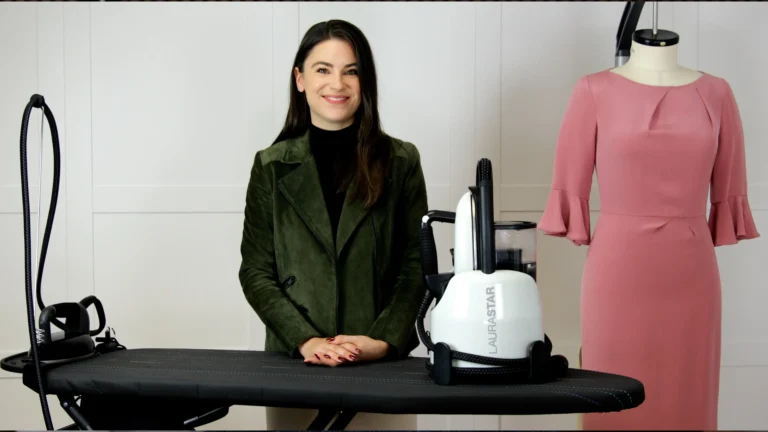
I use a Laurastar iron, which I’ll be honest – is an investment. But there are good alternatives at a lower price point. Whatever iron you choose, look for:
Before purchasing, read reviews carefully. A poor iron can damage a garment you’ve spent hours making – it’s worth getting right.
My verdict: Don’t underestimate the iron. It is as important as your sewing machine – invest accordingly.
Shop the Laurastar Iron: Laurastar Lift | Laurastar Smart U
Laurastar Website: Click Here
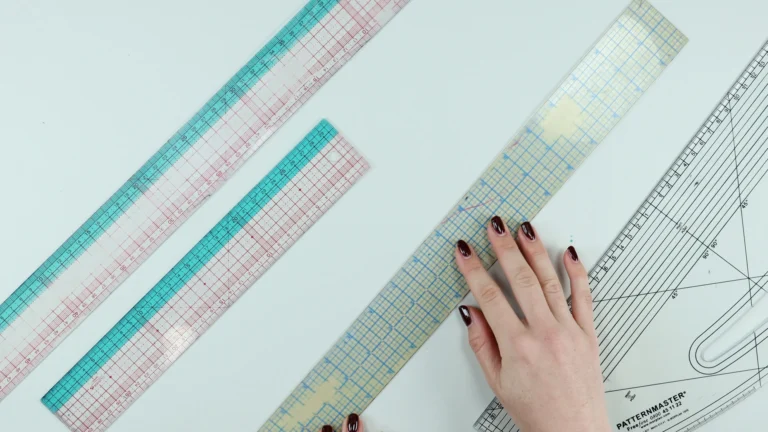
Most people reach for a tape measure when they start dressmaking. And yes – you need one, but only for measuring the body. For everything else in my studio, I use clear plastic rulers.
I reach for these constantly: pattern drafting, adjusting patterns, marking stitching lines, pressing up hems, measuring seam allowances. If I need to measure anything, I pick up a ruler.
I use two options:
One word of caution: these rulers are plastic and will melt if left near a hot iron. I use them right at the ironing board constantly – just don’t walk away and leave them near the iron. I’ve melted a few over the years.
My verdict: I use these more than any other measuring tool I own. An essential purchase for any dressmaker.
Shop the Clover Rulers: 30cm | 50cm
Shop the Imperial Ruler: Imperial Ruler
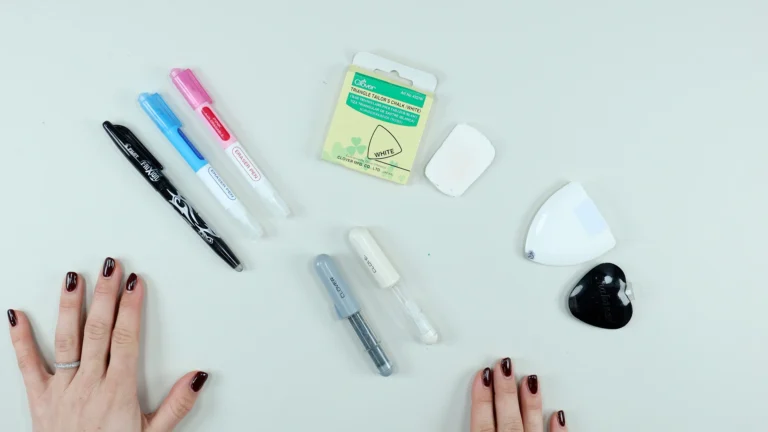
For marking fabric I’ve tried everything – removable pens, heat-erase pens, chalk blocks, chalk that removes with the iron. But the tool I reach for most is the chalk pen, specifically the Clover Chaco Liner.
The fine wheel delivers a precise, thin line of chalk – just enough to see clearly, but not so much that it gets everywhere or is difficult to remove. I also use a similar Japanese brand (bought in Japan – I don’t know the brand name) and a Chakoner, also from Japan. The Japanese versions tend to produce an even finer line.
Colours available: white, grey, and yellow. Start with white – it’s the most versatile.
One tip: don’t try to refill with generic powder chalk. I’ve had issues with it not feeding through the wheel correctly. Use the correct brand refills.
My verdict: The most-used marking tool in my studio. Precise, clean, and easy to use.
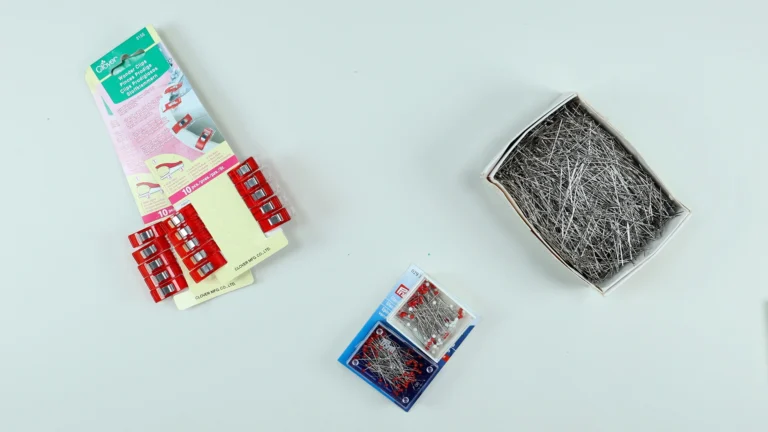
For holding fabric layers together you have options: pins, clips, or a basting / tacking stitch. I use all three depending on the situation, but my most-reached-for option is pins – specifically glass-headed silk pins or super fine pins.
These glide through fabric without snagging, which matters a lot on delicate materials. I also keep a bulk pack of standard steel pins for general use, but the silk pins are what I prefer.
Why glass-headed over plastic-headed?
Exception: for very heavyweight fabrics like thick denim, super fine pins may bend. Choose a thicker pin for those.
Available from both Clover, Prym and Dritz.
My verdict: Worth the upgrade from basic pins. The difference in how they glide through fabric is immediately noticeable.
Shop the Clover Silk Pins
Shop Super Fine Pins
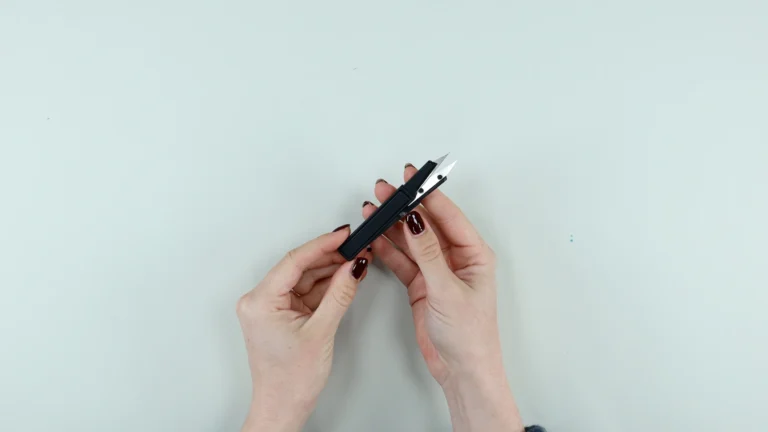
I couldn’t finish this post without mentioning my snips. I use this sewing tool at the sewing machine constantly – trimming threads after every seam, and clipping into necklines and curved seams to release tension.
I own several pairs, but the ones I always reach for are by Gingher. Sharp, comfortable, and reliable.
My verdict: A small investment that makes a big difference to your workflow at the machine.
What sewing tools do I need as a beginner? Start with a good pair of fabric scissors, a clear plastic ruler, a chalk pen for marking, and a box of pins. A quality iron is also essential – more important than most beginners realise.
What’s the difference between silk pins and regular pins? Silk pins (also called super fine pins) are thinner and sharper than standard pins, allowing them to glide through fabric without snagging. They’re ideal for most dressmaking fabrics but may bend on very heavyweight materials like thick denim.
Can I use a rotary cutter instead of scissors? Yes – many sewists prefer a rotary cutter for all their cutting needs. I use mine for stretchy fabrics, very lightweight materials, and detailed work like lingerie. It comes down to personal preference.
Why is the iron so important in sewing? Pressing seams as you sew is what gives garments a professional finish. A quality iron with good steam control is just as important as your sewing machine – possibly more so for the final result.